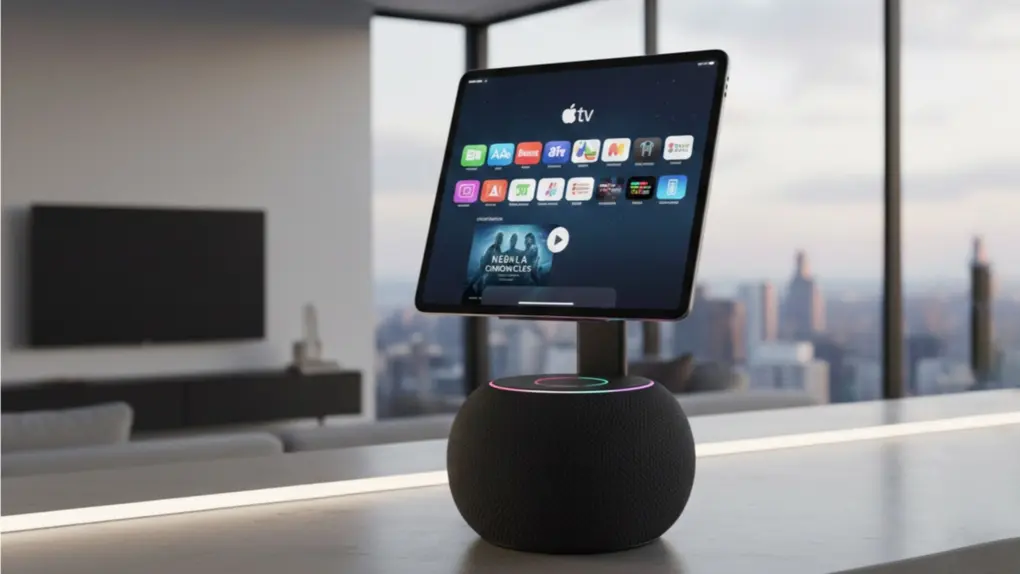
Apple’s next HomePod is reportedly stuck in limbo while the company works on its delayed AI Siri upgrade. And honestly? That might be what the HomePod 3 needs. But before Apple unveils the HomePod 3, it needs to address some serious gaps that make it feel far less intelligent than the competition.
The HomePod’s problem has never been its hardware. The speakers sound fantastic, and the device tightly integrates into Apple’s ecosystem. But the user experience still feels a generation behind competing smart speakers. If Apple wants the HomePod 3 to be the center of its smart home ambitions, a faster chip and a shinier enclosure won’t be enough. Here’s what actually needs to change.
5 upgrades the HomePod needs
Years after a late entry into the smart speaker category, the HomePod remains something of an also-ran. Amazon Echo, the first mover in the space, remains the clear market leader, thanks to a variety of factors, from cheap price points to Alexa’s growing capabilities. Other companies, from Google to Sonos, offer stiff competition.
So, how can Apple win the smart speaker game? It needs to provide substantial upgrades that make the HomePod at least as good as its competitors. And that comes down to focusing on the “smart” part, not the “speaker” part.
Siri desperately needs an AI upgrade
To be honest, Siri on HomePod feels less like an assistant and more like a search bar that stops working the moment you go off-script. Ask it anything – a natural follow-up question, a multistep query, or anything that requires context, and Siri quickly falls apart.
Meanwhile, Amazon and Google already pushed LLM upgrades, letting their assistants handle multistep, conversational requests with far more flexibility.
And that is exactly why Apple needs to rebuild Siri around Apple Intelligence. Since HomePod is a voice-first device, Apple needs to make sure that the HomePod 3’s voice assistant can easily handle a conversation.
If the company releases it without solving the problem, HomePod 3 will feel outdated the day it goes on sale.
Spotify integration needs improvement
The HomePod, unsurprisingly, works pretty well with Apple Music. But the moment you step outside the ecosystem, things get messy real quick. Currently, support for Spotify is inconsistent, and handoffs are unpredictable at best.
Ask Siri to play something on Spotify or Tidal, and you’ll either hit an error or get redirected to Apple Music – not because it’s broken, but because Apple designed it that way. It might have been justifiable five years ago, but selling a $299 smart speaker that does not play well with popular music streaming services is frustrating at best.
With the HomePod 3, Apple needs to treat Spotify, Tidal, YouTube Music and others as real options, and these services should work without any workarounds. Right now, using Spotify and similar services feels like using a car with all radio presets removed. It’s functional, but not that useful.
A real screen could make HomePod much more useful
Speakers from Apple’s competitors already feature smart displays; the HomePod doesn’t. And that gap is becoming harder to ignore.
Adding a display isn’t a compromise; it’s long overdue. A screen would turn the HomePod into a real kitchen hub, allowing users to see the timer countdown from far away and making it easy to take FaceTime calls without grabbing their iPhone. Shipping a HomePod 3 without a screen in 2026 would feel as stubborn as refusing to drop the headphone jack.
It also gives Siri something to show for itself. Right now, Siri’s responses just disappear into the air. A screen would provide a reference point.
And here’s where Apple can shine. Most smart displays on the market right now look ugly and often suffer from a plasticky build. An Apple smart display, tightly integrated with the iPhone and Apple Intelligence, can emerge as a clear winner.
The good news is, Apple has reportedly been working on such a device for years.
HomeKit still needs work
Apple has spent years marketing the HomePod as a hub for home automation. While the pitch sounds compelling, the reality proves much more complicated than you might think.
HomeKit-compatible accessories are available, yet automations fail for no apparent reason. And Siri’s response to most errors often ends up with some variation of, “Sorry, something went wrong.”
Smart home connectivity only feels good when it works. Unfortunately, the second you open Apple’s Home app for a device that refuses to respond to voice commands, the magic disappears completely.
When Apple unveils the HomePod 3, it needs to come with an improved version of HomeKit that’s more reliable than the one we have today. That’s why competitors with less intuitive software but more reliable fundamentals continue to win consumers who should otherwise fall into Apple’s camp.
Voice recognition should be more personal
HomePod can already distinguish between different users and give personalized answers. But in practice, it gets confused at times and even refuses to give personal information.
Apple should make the HomePod 3 work with multiple people in a household, know who’s talking immediately, and tailor every response accordingly.
For example, HomePod should specify which office the user is heading to and give personal music recommendations depending on their taste. These may seem like small complaints, but they represent a failure of the product’s core premise.
This is exactly the kind of personal, privacy-focused experience Apple Intelligence promises. Apple controls the hardware, software and ecosystem. But if it is unable to deliver personal voice recognition on its own speaker, that’s a huge problem.
Apple already nailed the hardware side of things on the HomePod. What the speaker still lacks is intelligence. In a segment where AI assistants are now becoming one of the main reasons why people use smart speakers, the HomePod needs more than a faster chipset and better design.
Delaying the HomePod 3 until Apple gets Apple Intelligence ready might end up being one of the smarter product decisions the company has made. Because in 2026, people don’t buy smart speakers just for an excellent audio experience. They buy them for the “smart” part. On that front, the HomePod still has a long way to go.

Anurag Chawake is a tech-focused writer specializing in smartphones, apps and consumer technology. His interest in computers began during the Windows 98 era, eventually leading him to explore everything from operating systems to mobile devices and PC hardware. Anurag previously contributed to The Indian Express, covering Apple, Android, gaming and the broader technology landscape.

